
Why Did We Decide to Create a Card Game About Cybersecurity?
Why Did We Decide to Create a Card Game About Cybersecurity?
A lot of people create card games that feature a variety of themes, but a question we’re frequently asked is, “Why did you decide to create a card game about cybersecurity?” Which, to be honest, is a legitimate question.
To understand why we created Hack Attack: Defense , we need to both take a closer look at our purpose for creating games in general, and peer behind the firewall to reveal how the game actually works.
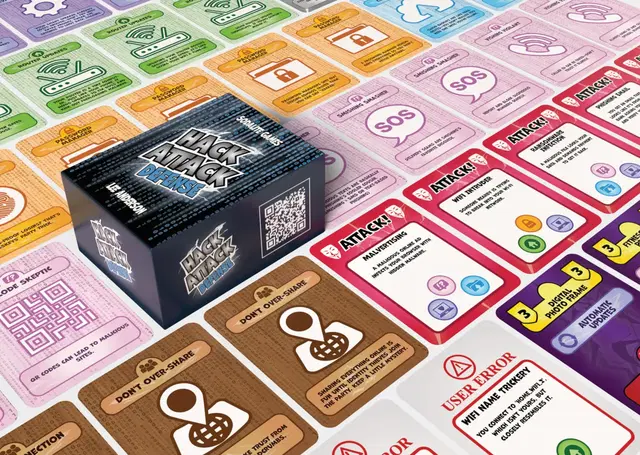
Quick Game Details About Hack Attack: Defense
- Hack Attack: Defense is a quick card game that can be completed in 15-30 minutes, accommodates 2-6 players, and is suitable for ages 10 and over.
- This cybersecurity odyssey is not only a card game for kids, it’s a quick and easy card game for adults and seniors, too. No tech-savvy required!
- Hack Attack: Defense combines real-world cyber threats with practical cyber safety techniques, building awareness and knowledge about a growing concern in society.
- Play anywhere with the portable card box, single-page instructions, and dramatic, fun, and exciting game play.
What Kind of Card Games Does Sodalite Games Even Want to Make?
Sodalite Games is all about finding ways to have fun and relax without hours of commitment and setup — the entire purpose is to make game night the best night of the week.
But, what does that mean exactly?
- It means we’re looking for games that are easy to play, but also have depth.
- We want games you can play multiple times, and still manage to have a blast.
- And finally, we want games that stretch across a lot of different styles and genres, but are always inclusive and accessible.
What we don’t want to do is set limits on the subject matter of each game, and instead, we’d rather focus on fostering unique and exciting card games (and board games) that are suitable for friends, couples, and families.
Based on these requirements, Hack Attack: Defense fits the bill in every way. Once we realized our purpose aligned with the game, we were ready to get started.
How Hack Attack: Defense Was Designed & Authenticated
Hack Attack: Defense was designed by Lee Anderson , an actual cybersecurity professional and avid player of board games. As a learning-experience designer from the United States, part of Lee’s passion is for human-centered security education.

A cybersecurity professional and learning-experience designer from the United States with a passion for human-centered security education and an avid love of board games that he enjoys playing with family and friends.
The fact is, as our reliance on technology and our online footprint continues to grow, so do cybersecurity threats. Rather than write another mind-numbing instructional guide or video, Lee wanted to be able to teach real-world cybersecurity protocols to the masses. Lee shares:
“This is something that, for a while, has been a passion project of mine in educating those who are defenseless, who are victims, who are taken advantage of.”
But how can you do that in a fun and engaging way? Everyone likes flashy reels and cute animal videos, but no one gets excited about checking for router updates, setting up multi-factor authentication, or managing cloud backups (well, maybe Lee does — but the average person does not).
We get it, on its own, cybersecurity isn’t glamorous, it can even seem boring and laborious. Despite the lackluster view of cybersecurity from a distance, Lee turned on his VPN, started creatively coding, and designed an engaging, fun, and competitive card game to change that perspective.
Hack Attack: Defense Game Play: Transforming Tech Talk into Tech Wins
So how did we make cybersecurity education into a complete game that people actually like?
We knew that we didn’t want to gamify education, where the experience is a quiz simply designed as fun. Lee explains:
“I wanted to make the game as realistic as possible, lightly educational. I know that educational games can sometimes flounder if they focus too much on the educational aspect.”
Instead, we started by designing a gameplay system that stood out on its own — featuring a competitive balancing act involving weighing cybersecurity risks vs. tech rewards that results in dramatic and exciting moments and gameplay outcomes.
This approach ensures that players who aren’t tech-savvy, or aren’t interested in technology as a genre, can still find a lot of enjoyment when playing this robust resource management game.
That being said, from our experience, those who learn to master the tech talk, can absolutely use their savvy to take home tech wins during the game.
Every Card With a Purpose
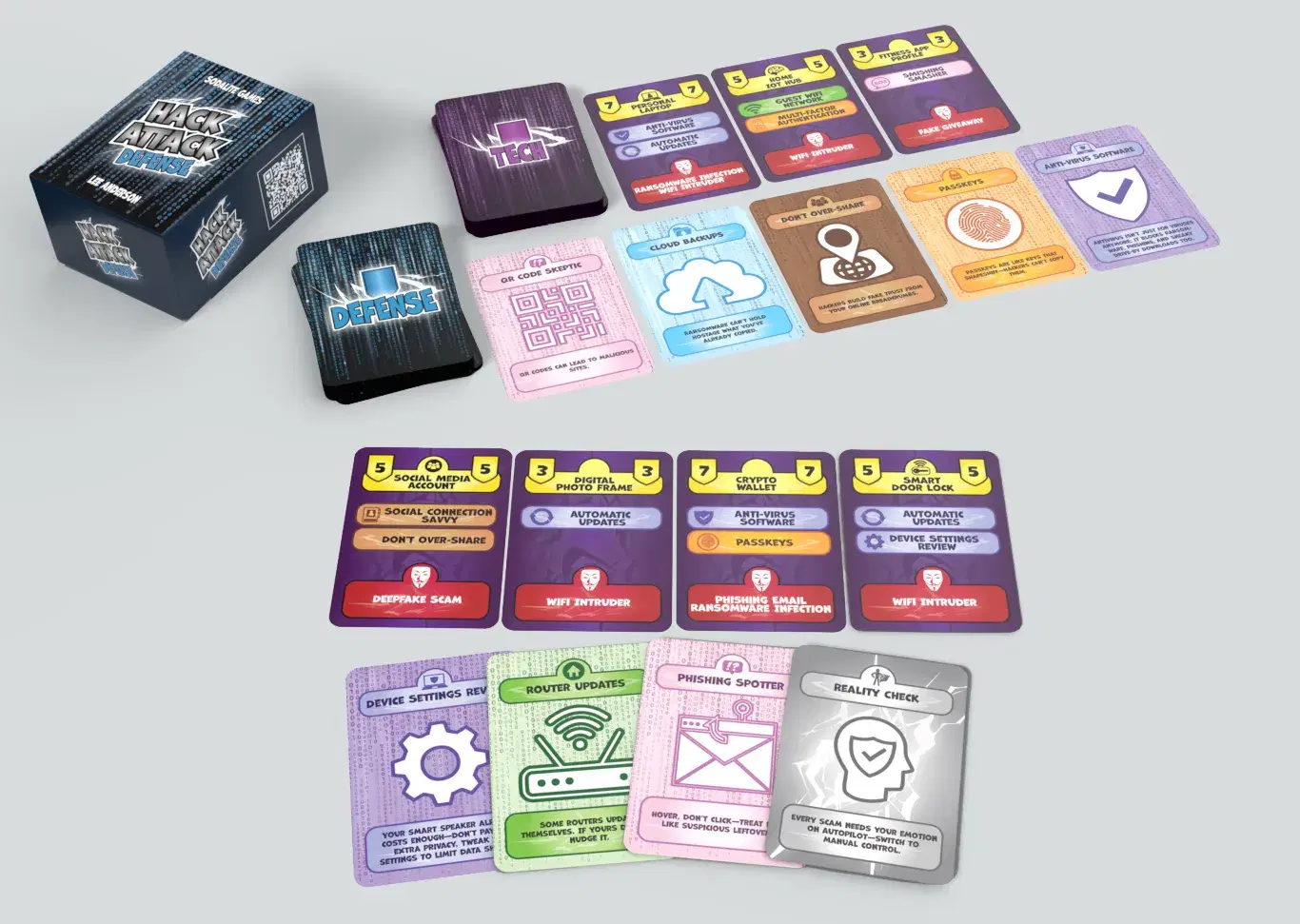
From there, we strategically built cybersecurity terminology, real-world tech threats, and practical safety techniques into the gameplay itself. Every card in Hack Attack: Defense features up-to-date Tech, cybersecurity Defenses, online Attacks, and real-world examples of User Errors. Lee notes:
“I wanted to make [the game] realistic, so that when you are protecting tech, the tech cards resemble things that people own in real life. And the defenses needed to protect them are based on my knowledge in cybersecurity, all while trying to maximize the gameplay value.”
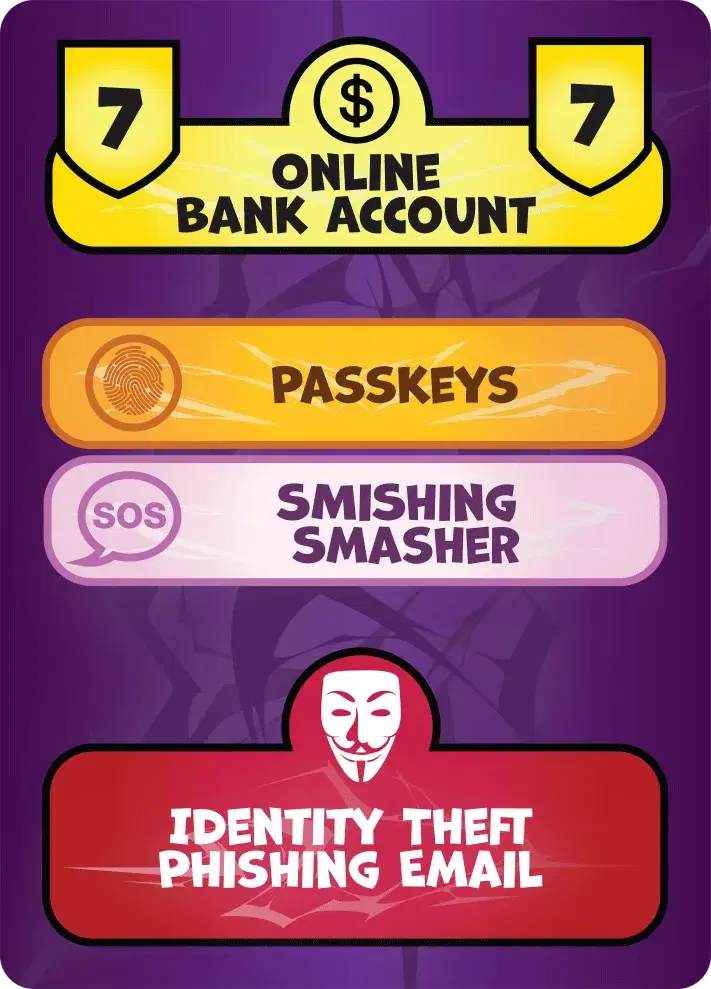
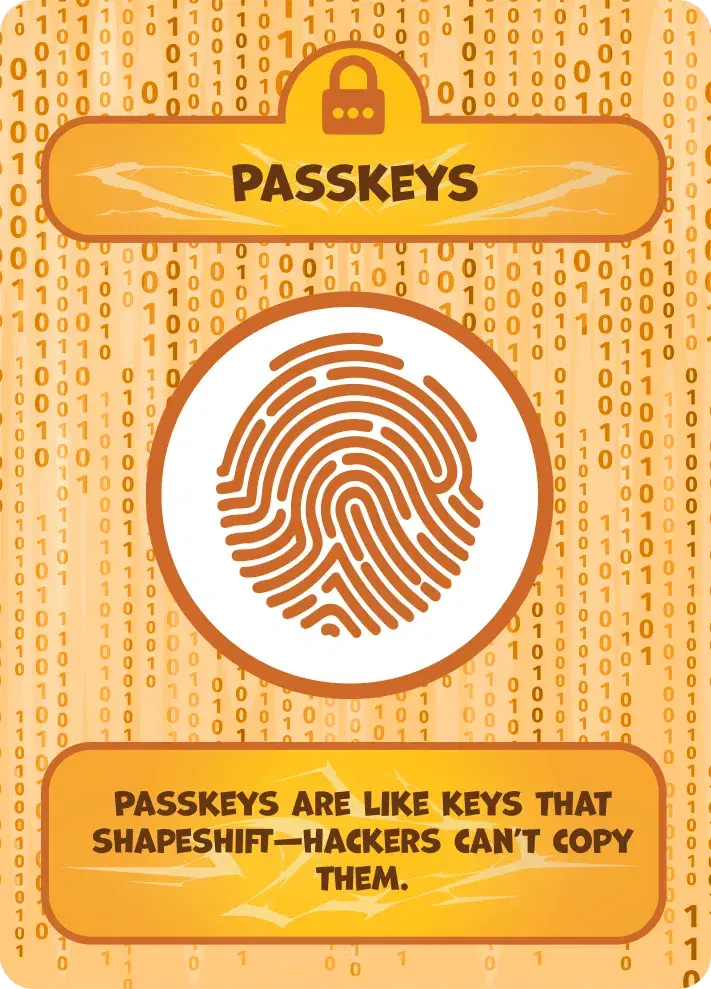
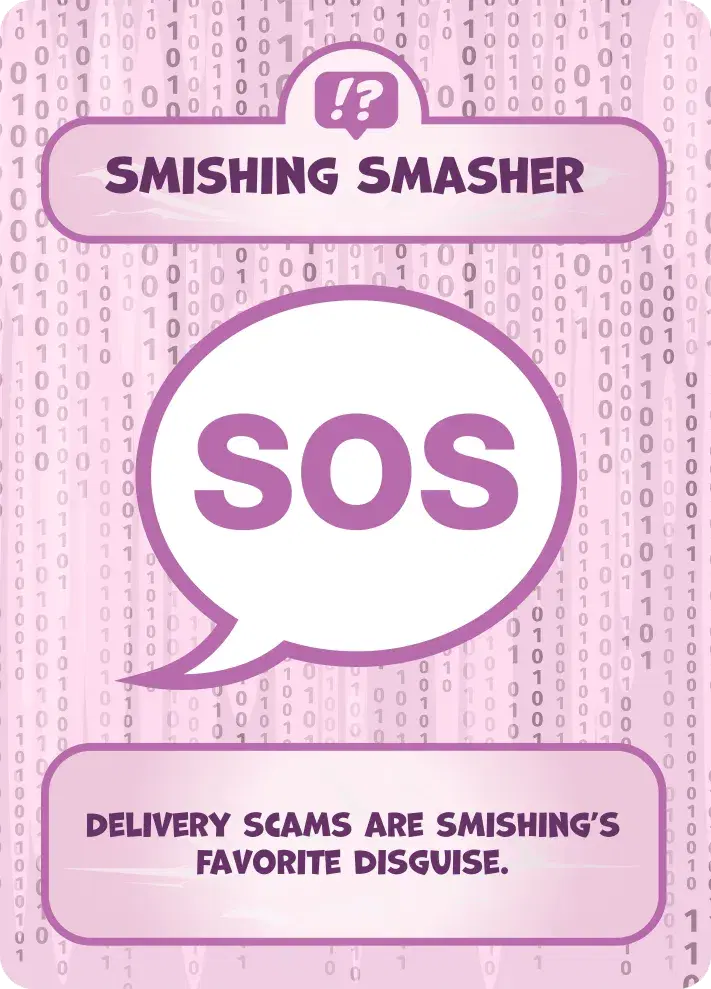
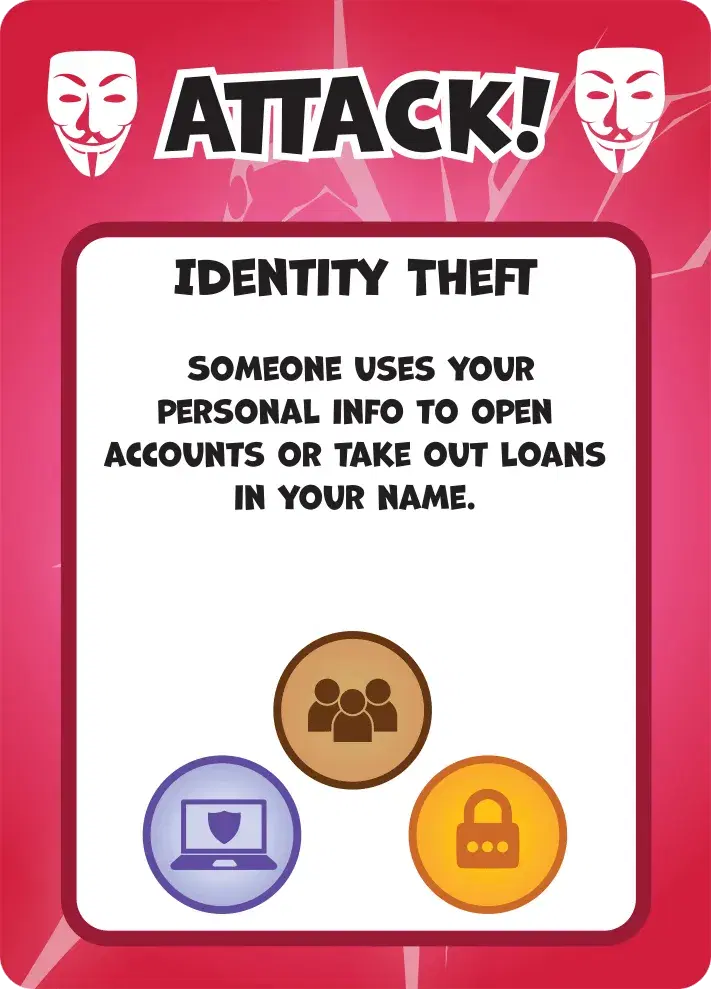
For example, Aunt Linda might have the Online Bank Account Tech card. To prevent her information from being stolen, she uses a Passkeys and Smishing Smasher Defense card, and when she is faced with an Identity Theft Attack card, she’s able to keep her identity, and her online bank account protected.
 |  |  |  |
|---|
As you can see, the cards we included in the game directly mirror real life, highlighting how we constantly want to acquire new and more advanced tech, but often learn the hard way that you also need to keep it secure.
Symbolic Artwork Helps Convey Concepts Clearly
To bring all the concepts together in an approachable and easy-to-understand format, Cristian Aluas provided the artwork and designs for the cards in Hack Attack: Defense, helping communicate cybersecurity concepts with visual cues that any player could easily interpret.
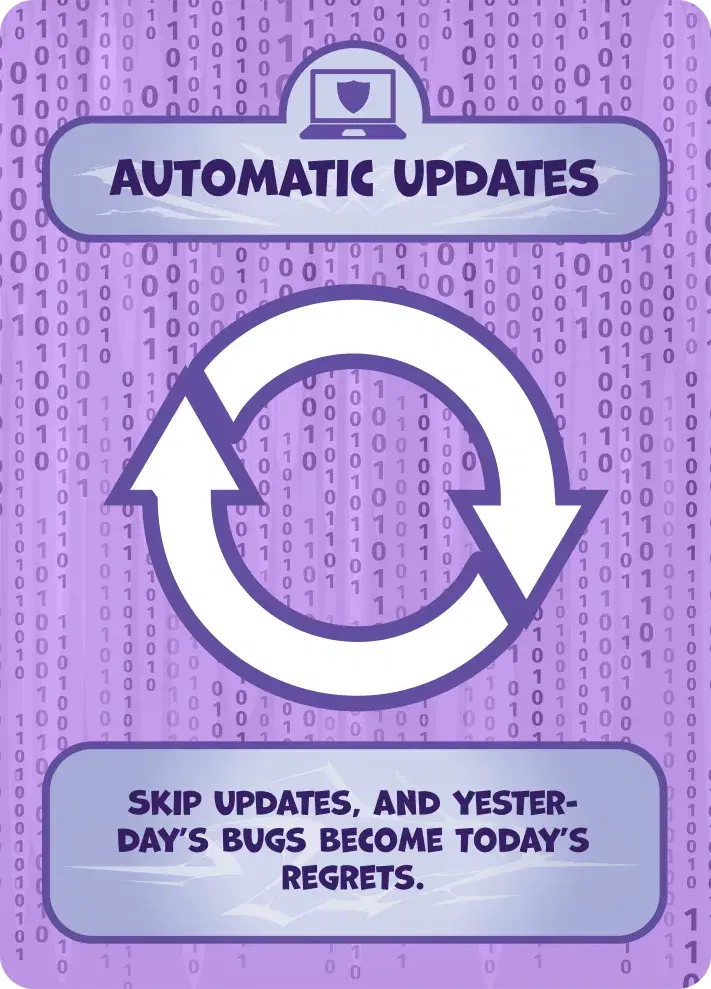
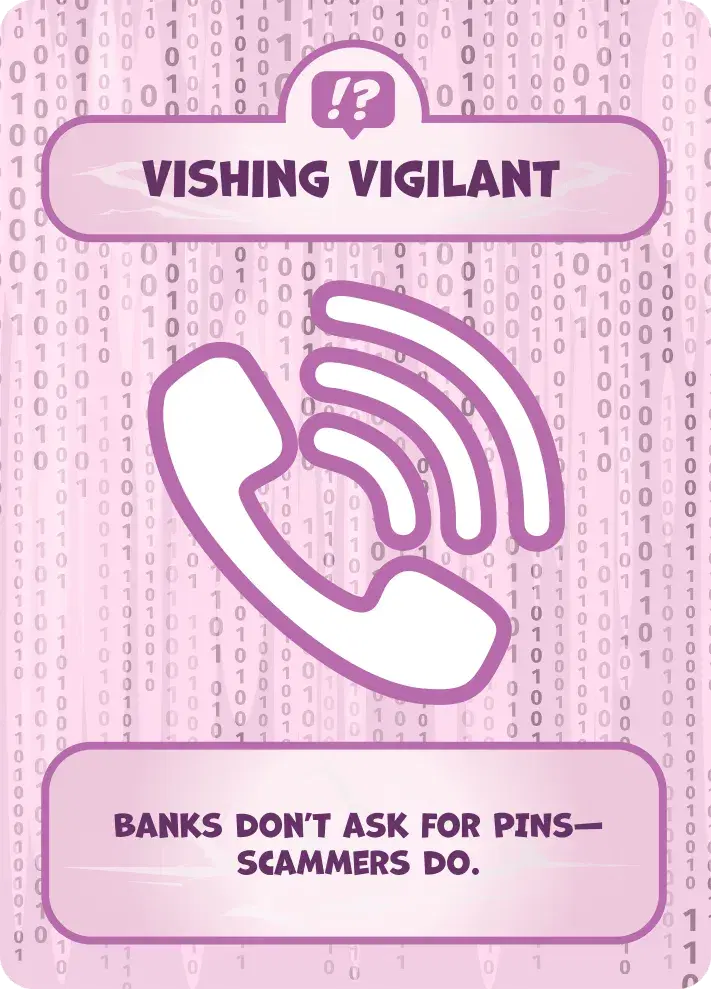
While players may not actually know how Cloud Backups work, the artwork for the cards matches the symbols used in modern tech. This design choice helps establish player cybersecurity recognition in and out of the game.
It was important to Lee that, “the attacks that show up are real attacks, and the defenses needed to protect against the attacks are real.”
Hack Attack: Defense: Value-Driven Enjoyment
The end result is that regardless of your tech knowledge (or lack thereof), Hack Attack: Defense will inevitably teach you about cybersecurity without you even realizing it.
During the fight to strategize and win the game, players start to wonder if their personal passwords are safe, if their devices need to be updated, and may even take a second to think before they overshare next time they’re online.
How Do You Play Hack Attack: Defense?
Now that you know why and how the game was created, let’s dive into how this easy-to-learn card game actually works.
Watch the Video Here: How to Play - Hack Attack: Defense
Build Your Tech Deck
Start with 4 visible Tech cards that you are sworn to protect from cyber Attacks and User Errors — you can only ever hold 4 cards, because if you’re responsible for too much tech, you’ll never be able to keep it safe and secure.
Establish Defenses
Keep your Defense cards secret from other players, as you prepare to protect your Tech from ongoing security threats like Identity Theft, Malvertising, Deepfake Scams, and more.
Acquire & Secure Tech
On your turn, you must take 2 actions. Decide whether you’d like to Acquire valuable new Tech, or Secure existing Tech from incoming attacks.
Activate Security Measures
Use Defense cards to implement real-world security measures like Anti-Virus Software, Router Updates, Multi-Factor Authentication, and Local Backups to keep your Tech protected from hackers, scammers, and even User Errors.
Tech Protected & Encrypted
Once you’ve successfully protected 4 Tech cards, the end of the game is triggered. The player who protected the highest total value of Tech cards wins.
Practical Cybersecurity Takeaways from Hack Attack: Defense
Quick and exciting game play is obviously the point of a card game, but what information can you actually learn when playing Hack Attack: Defense?
 | Master Cybersecurity BasicsHack Attack: Defense serves as a foundational lesson about the importance of cybersecurity, and even shows that it can have a more flashy and exciting side — avoiding hackers, scams, and building up defenses as a team can actually be exhilarating, and at times, even inspiring. Lee explains: “The collaborative nature of things was something that I really wanted to work on — the idea of working together to defeat an attack is something that I really wanted to implement because working together is how we can really better defend ourselves. | |
 | Update Older GenerationsMaybe you have an in-law that is clueless when it comes to cybersecurity — this game can help them recognize words and concepts they’d never even considered before. In fact, one night of playing the game could potentially help save an elderly family member from falling victim to online scams or identity theft. Lee says: “I’m in the space of cyber security awareness, specifically social engineering awareness — knowing that people are the target of scams, and that our biology is exploited to the advantage of attackers, drives me to create more educational opportunities. | |
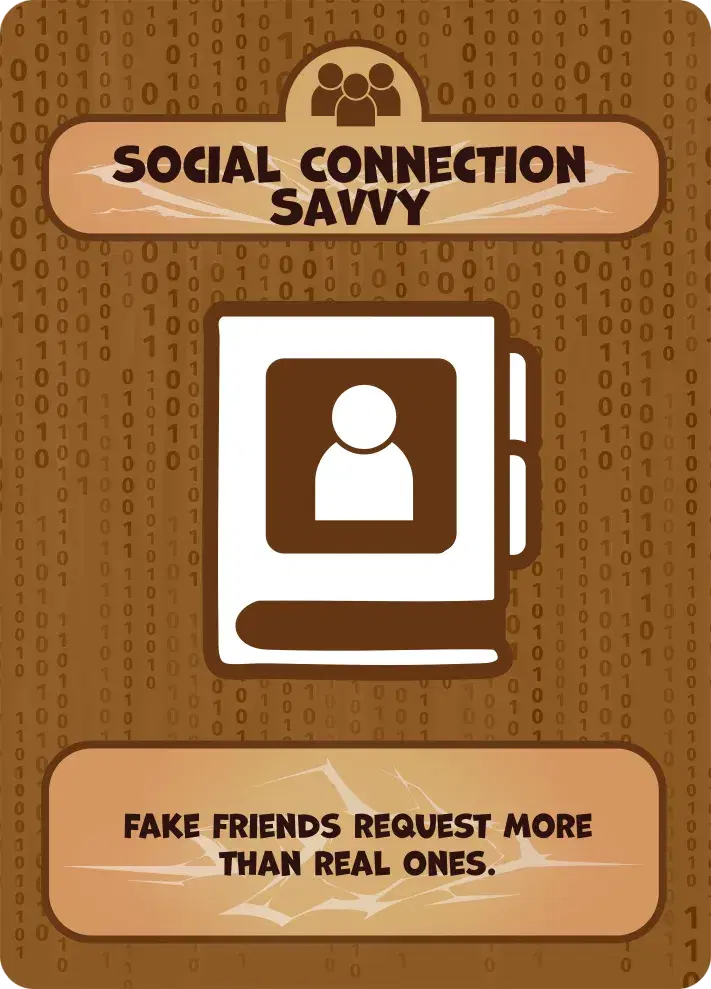 | Protect Online NewbiesFor those with kids who are getting their first cell phones, you might consider having them play this game before they are allowed to get online — it could protect them from sharing personal information with strangers on the internet, or making themselves vulnerable to bullying and harassment. Lee highlights: “I volunteer with the Innocent Lives Foundation where we work to identify online [child] predators and work with law enforcement to get them apprehended. | |
Real Player Experiences With Hack Attack: Defense
During the game’s development, we began play testing. While we were confident in the game from the start, we were blown away by the positive feedback we got during the testing phase.
More than a Fun Game
The first thing we discovered is that the cybersecurity theme of the game, seemingly arbitrary at first, immediately resonated with all players since tech is woven into every aspect of our lives — players say: “Hack Attack: Defense is such a great idea. I love this. My parents need this. I need this.”
While cybersecurity terminology was new to some, players were always motivated by tech they used in their daily lives — everything from Pet Trackers and Smart Thermostats, to Cell Phones and School Portal Logins.
When playing the game, we found that players got increasingly sensitive to their tech’s vulnerabilities regardless of tech proficiency. During the play testing phase:
“[W]e could see people's wheels spinning… where they realized that there were things that they needed, and it made it safe because they could then just ask, or look it up, and not feel dumb.”
In fact, after a few rounds, even players with the lowest technical proficiency were able to understand and apply basic cybersecurity techniques, and even win the game. For example:
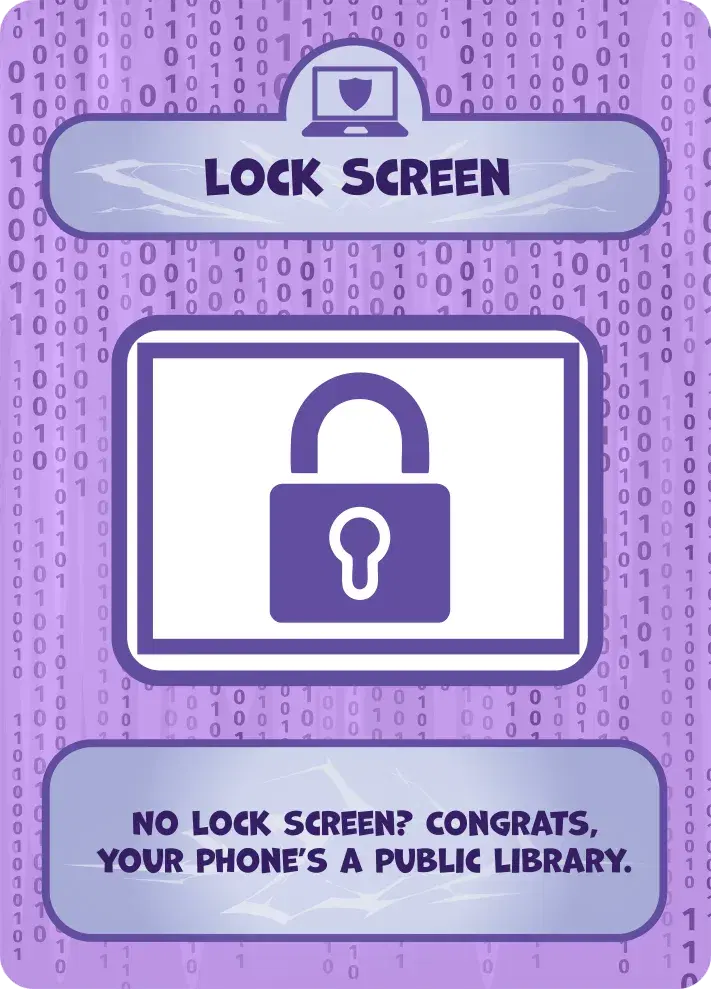
- Youngest siblings quickly learned how important a Lock Screen can be (to protect from friends or even their brothers and sisters).
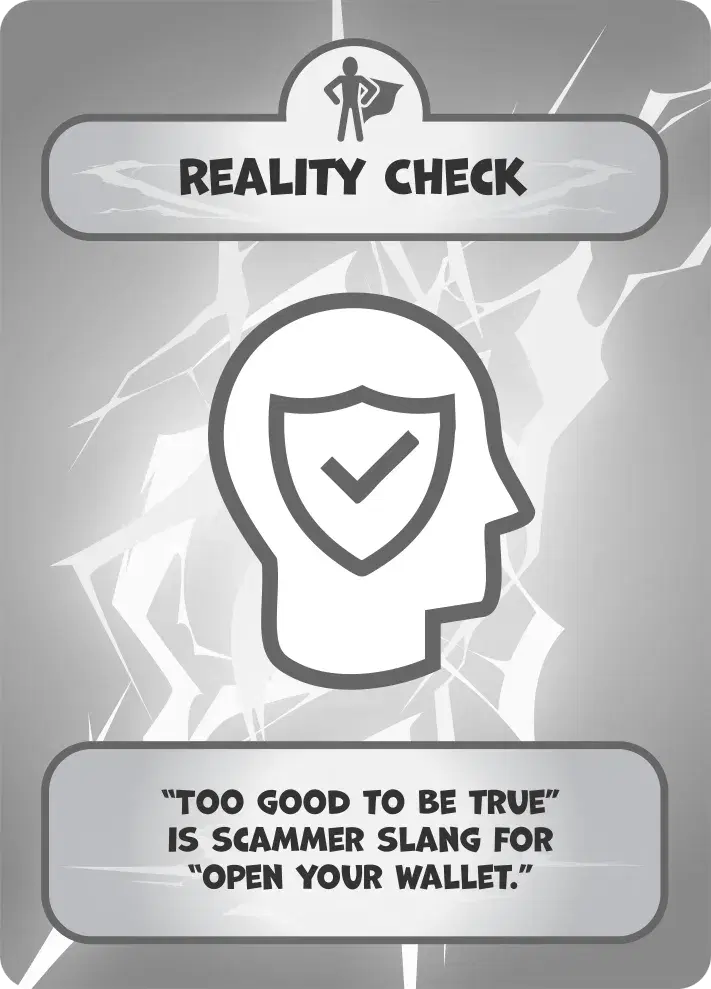
- Grandma got a Reality Check about the perils of falling victim to scammer slang.
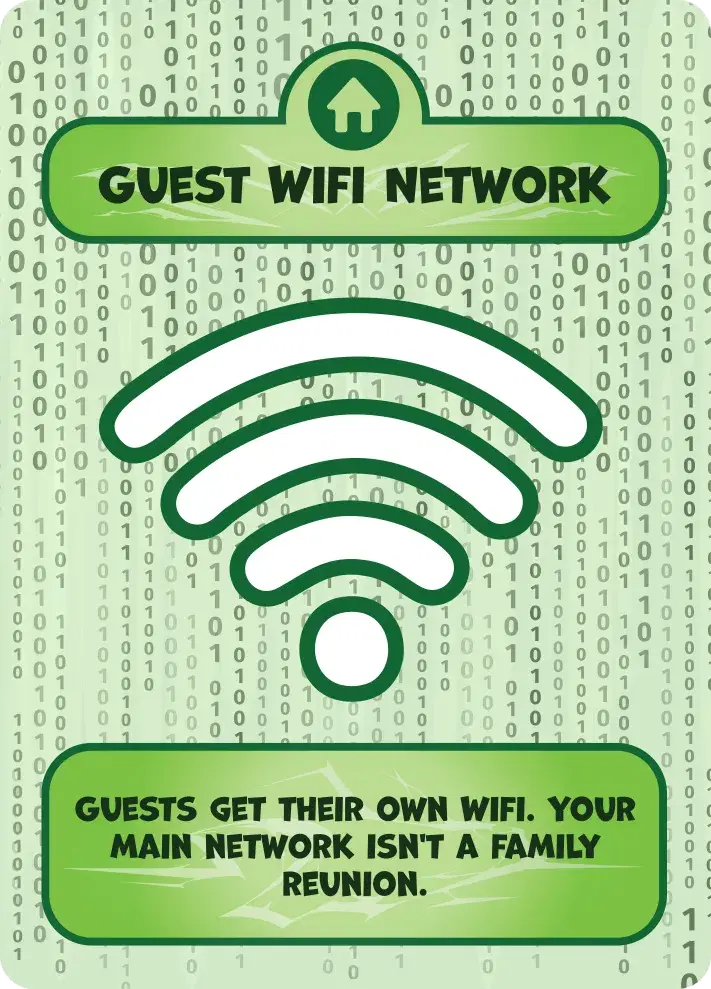
- Couples learned about how important a Guest WiFi Network is when hosting in-laws or friends
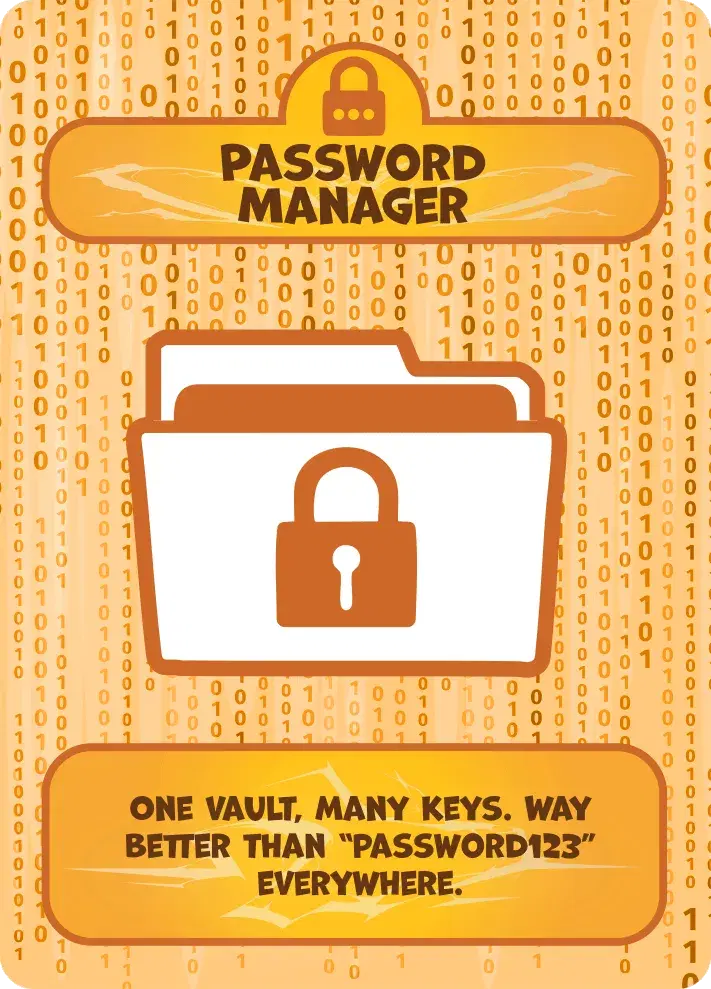
- Your most whimsical friend learned that a Password Manager is much more secure than reusing the same password for all their online accounts.
 |  |
 |  |
Hack Attack: Defense: Risks, Rewards, and Real-Life Application
So, to answer your initial question, “why did we decide to create a card game about cybersecurity?” Simply put, why not?
Hack Attack: Defense seamlessly combines real-world cyber threats with practical cyber safety techniques, making this easy-to-learn card game a blast for the whole family (even players who aren’t tech-savvy).
More than just a fun card game, Hack Attack: Defense has purpose:
“That reality check can be a game changer in defending against attacks and protecting your stuff. If you can use your common sense, if you can be cool, if you can take a deep breath and evaluate what's happening, that will go farther than anything else in protecting yourself from cyber attacks.”
Continue Reading
- Hack Attack Has Found a New Home Read the Story
- We Made a Secret Game to Give You for Free, But Forgot to Tell You About It…Until Now!Read the Story
- We Opened WHATEVER to House Rules & We All Caught a Case of Auction FeverRead the Story